
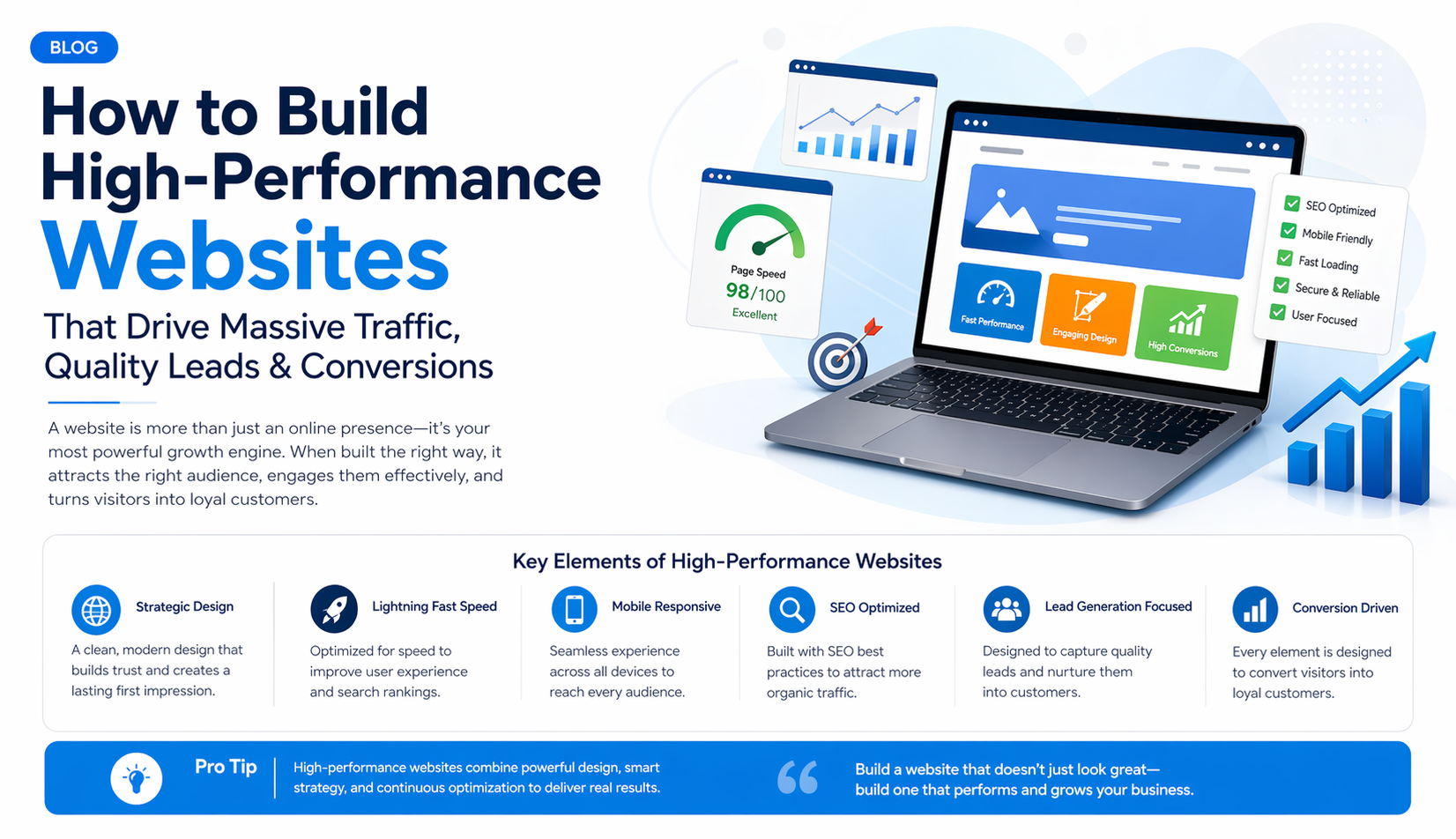
How to Build High-Performance Websites That DriveMassive Traffic, Quality Leads & Conversions
Here’s how you can create a website that doesn’t just exist but dominates.
-
Speed Is Non-Negotiable: Optimize for Performance
Website speed directly impacts user experience, SEO rankings, and conversions. Studies consistently show that even a one-second delay can significantly reduce conversions. Start by compressing images using modern formats like WebP, enabling browser caching, and minimizing CSS and JavaScript files. Use a Content Delivery Network (CDN) to reduce latency and ensure fast load times globally. A fast-loading website keeps users engaged and signals quality to search engines, giving you a competitive edge.
-
Design with Purpose: User Experience Comes First
A visually appealing website is important, but functionality is what drives results. Your design should guide users seamlessly toward their goals. Use clear navigation menus, intuitive layouts, and a mobile-first approach since the majority of users now browse on smartphones. Reduce clutter, use whitespace effectively, and ensure readability across all devices. Every design decision should answer one question: Does this make it easier for the user to take action?
-
Content That Attracts, Engages, and Converts
Content is your primary tool for driving organic traffic. But not just any content—strategic, high-quality, SEO-optimized content. Start with thorough keyword research to identify what your audience is searching for. Then create blog posts, landing pages, and resources that provide real value. Use compelling headlines to hook readers, and structure your content for easy scanning with subheadings and bullet points. Most importantly, align your content with user intent—whether informational, navigational, or transactional—to maximize engagement and conversions.
-
Master SEO: Build Visibility and Authority
Search Engine Optimization (SEO) is the backbone of sustainable traffic. On-page SEO includes optimizing title tags, meta descriptions, header tags, and keyword placement. Internal linking helps search engines understand your site structure and keeps users engaged longer. Technical SEO is equally important to ensure your website is mobile-friendly, secure (HTTPS), and free of broken links or crawl errors. Off-page SEO, especially high-quality backlinks, builds domain authority and improves rankings over time. SEO isn’t a one-time task, it’s an ongoing strategy.
-
Craft Irresistible Calls-to-Action (CTAs)
Driving traffic is only half the battle; the real goal is conversion. Every page on your website should have a clear and compelling Call-to-Action (CTA). Use action-driven language like “Get Started,” “Claim Your Free Trial,” or “Download Now.” Place CTAs strategically above the fold, within content, and at the end of pages. Use contrasting colors to make them stand out and create a sense of urgency where appropriate. A well-designed CTA can dramatically increase conversion rates.
-
Use Data to Continuously Improve
High-performing websites are never static; they evolve based on data. Use analytics tools to track user behavior, including bounce rates, session duration, and conversion paths. Heatmaps can show where users click and how they scroll. Identify bottlenecks and optimize accordingly. A/B testing different headlines, layouts, and CTAs helps you understand what resonates best with your audience. Data-driven decisions eliminate guesswork and lead to consistent growth.
-
Build Trust Instantly
Trust is a critical factor in online conversions. When visitors land on your website, they should immediately feel confident in your brand. Include testimonials, reviews, client logos, and case studies to showcase social proof. Display trust badges, secure payment icons, and clear privacy policies. Make your contact information easily accessible. A professional design combined with authentic proof builds credibility and reduces hesitation.
-
Strategic Lead Generation That Works
Your website should be designed to capture leads at every opportunity. Use optimized landing pages with focused messaging and minimal distractions. Offer valuable incentives such as free eBooks, webinars, or consultations in exchange for user information. Keep forms short and simple and only ask for essential details. Exit-intent popups and scroll-triggered forms can also help capture users before they leave. The key is to provide value first, then ask for the conversion.
-
Mobile Optimization Is a Must
With mobile traffic dominating the web, a mobile-optimized experience is critical. Responsive design ensures your website adapts seamlessly to all screen sizes. Buttons should be easy to tap, text should be readable without zooming, and pages should load quickly on mobile networks. Google also prioritizes mobile-first indexing, meaning your mobile version directly impacts your rankings.
-
Consistency and Continuous Optimization
Building a high-performance website is not a one-time project; it’s an ongoing process. Regularly update your content, monitor performance metrics, and stay aligned with evolving SEO trends. Competitor analysis can also provide insights into new opportunities. The digital landscape changes rapidly, and staying proactive ensures you remain ahead.
Conclusion: Turn Your Website into a Growth Engine
A high-performance website is the perfect combination of speed, strategy, user experience, and conversion-focused design. It attracts the right audience, keeps them engaged, and guides them toward meaningful action. When executed correctly, your website becomes more than just a digital asset; it becomes your most powerful marketing and sales tool.
If you want to drive massive traffic, generate high-quality leads, and boost conversions, the solution isn’t shortcuts; it’s smart, consistent optimization. Build with intention, test relentlessly, and always focus on delivering value to your users. That’s how winning websites are made.